The Battery You Kept Checking
Edge AI Has to Fit the Machine
Senior Benthic Telemetry Correspondent
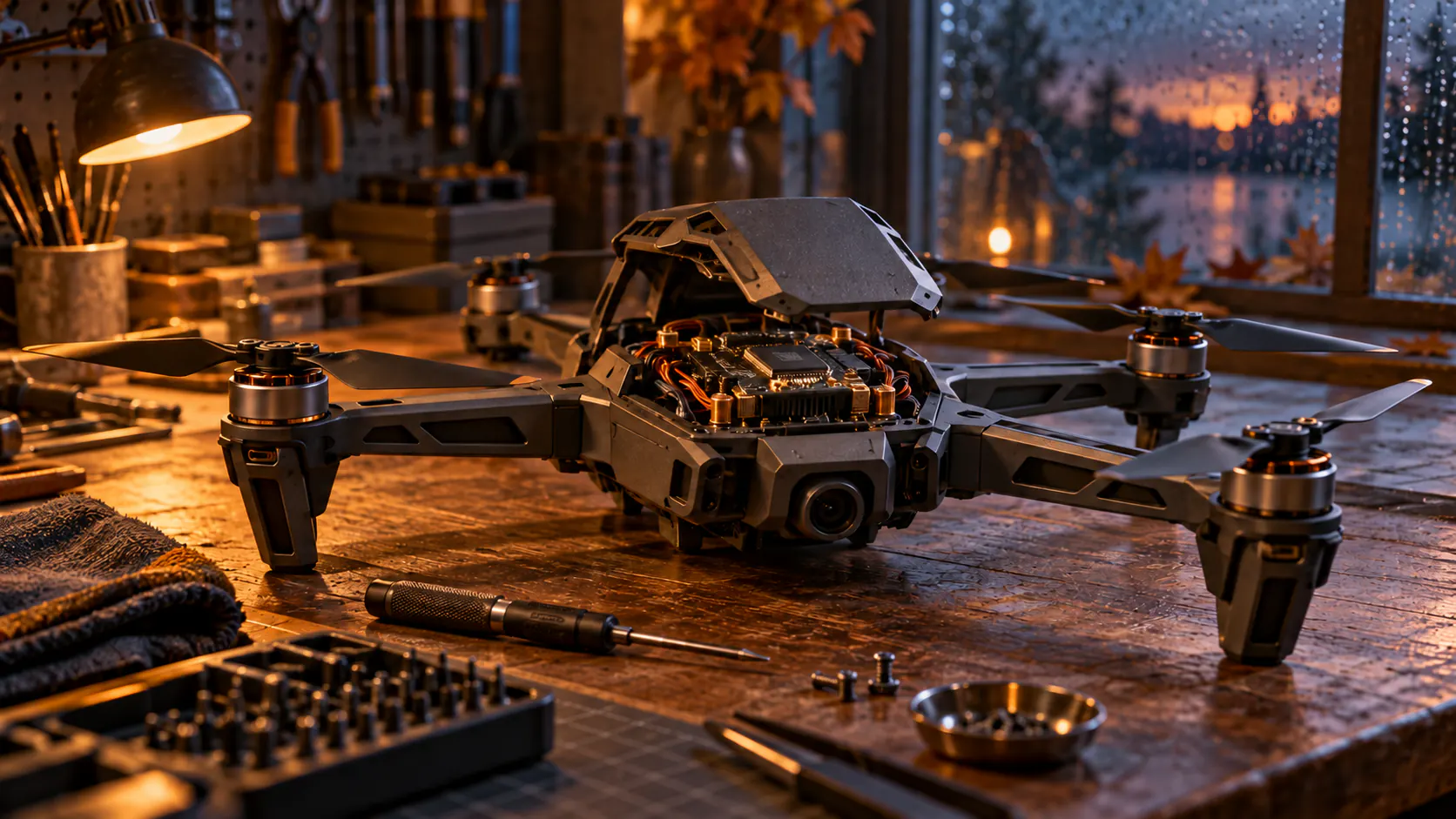
The cable did not reach
You turn the chair toward the outlet. The charging cable pulls tight.
The room has become a small negotiation between the place you want to sit and the place electricity happens to enter. Outside, October rain has darkened the pavement. Inside, you shift a lamp, move the cup, and check the battery again. The machine offers remarkable possibilities. First, it needs another six inches of cable.
Edge AI brings that negotiation into moving machines. Computing happens aboard the device, close to the cameras and sensors feeding it. For a robot or drone, the promise of doing more locally still has to fit inside a body that carries its power and sheds its heat. Intelligence has a place to live. That place has dimensions.
Soft is how every member starts. We learn where our attention runs out by finding ourselves tired halfway through an ordinary afternoon. The Great Melt arrives when a convenient promise persuades us to stop noticing those limits. A tool appears to remove the waiting, so we forget to ask what must keep working while we wait less.
What the reports filed
On October 13, 2026, Lantronix announced Spotter through GlobeNewswire. The company is previewing the robotics platform at AUSA in Washington, D.C., with availability planned for the fourth quarter. This is a company product announcement.
Lantronix specifies a 42 by 120 millimeter board powered by Qualcomm's Dragonwing QCS6490, with up to 12.5 TOPS of AI processing at single-digit watts. TOPS expresses trillions of operations per second. That advertised ceiling does not establish how quickly a particular vehicle will recognize an obstacle or finish a route. Those are separate measurements.
The release describes onboard vision, sensing, and vehicle control, supporting flight software including PX4 and ArduPilot. Customers retain control of their autonomy software. Edge AI supplies a foundation; builders still decide what their vehicles should do.
The Spotter product page details camera connections, sensor interfaces, and configurations with up to 8GB of memory and 64GB of storage. It also cautions that specifications may change and that software may not support every listed feature. Integration remains work, even when more of its pieces arrive together.
Earlier context comes from Qualcomm's February 24 robotics article, written by Ahmed Sadek. It describes offline or intermittent connectivity, power efficiency, and low latency as important requirements. Its proposed architecture separates immediate sensing and reactive actions from longer planning that can use nearby or remote computing. This is a vendor's architectural account, rather than an independent test of Spotter. Read alongside the new release, it helps identify the questions a builder still needs to answer.
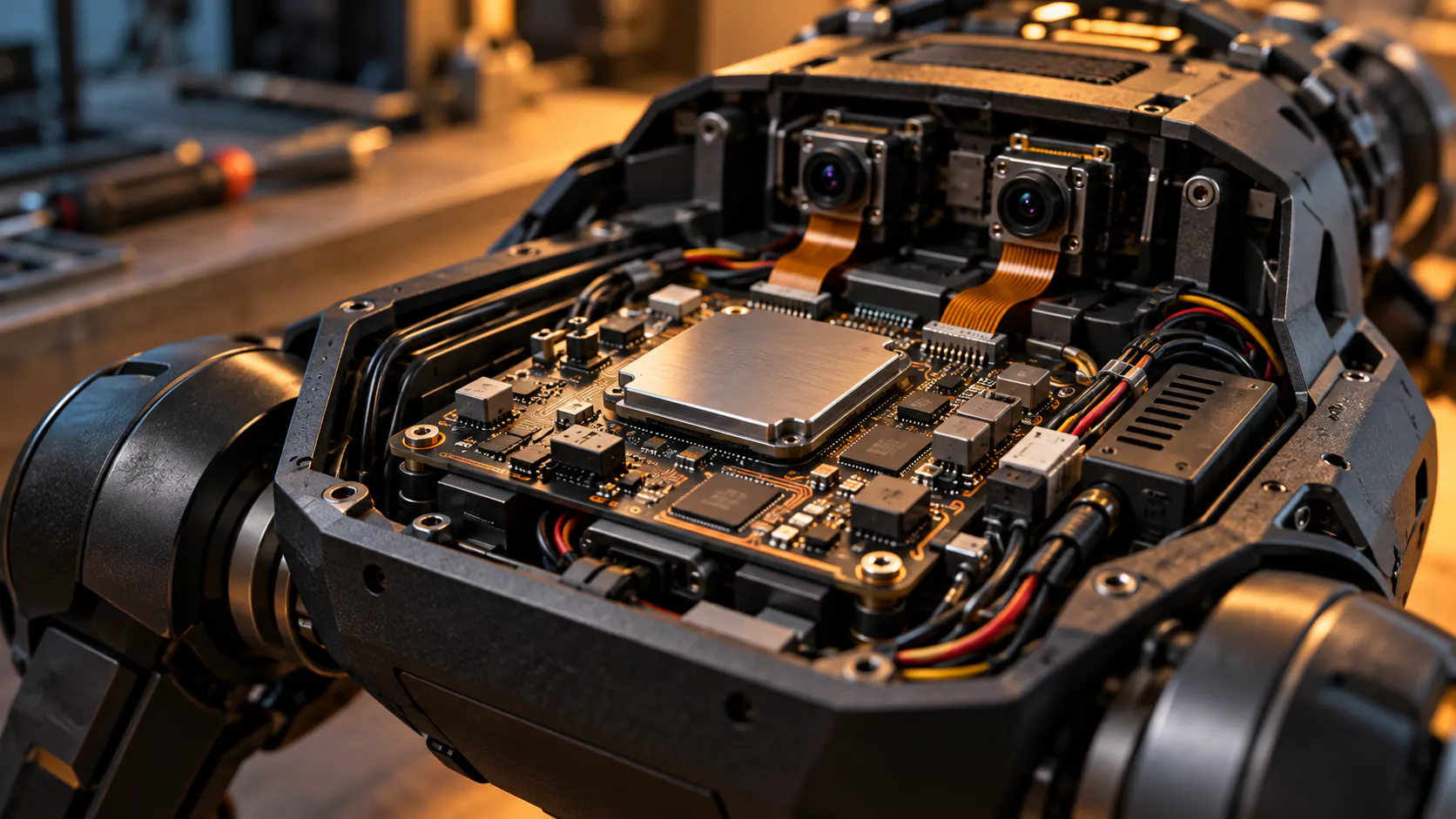
A body must carry the promise
The Order's reading begins with the cable. A useful machine must carry enough capacity for the task it has actually been given. Moving computation closer to a sensor changes where work happens. It also gives the designer a concrete place to inspect what that work requires. The advertised number becomes the beginning of a question.
Imagine a small inspection robot completing one familiar aisle. The questions are ordinary: can it keep doing the task after it warms up, when the battery is lower, or when a camera view becomes unhelpful? What happens when contact with its operator disappears? These are proposed review questions, not reported Spotter results. Their value is that someone can observe an answer.
This is the Soft-Shell Window of a new tool: the vulnerable interval when an encouraging first attempt begins to become a habit. Protect that interval by naming the conditions of the attempt. A short route under steady lighting can teach something useful. Record that scope so the next person can see what remains to be learned before depending on a longer route.
Apprenticeship gives the machine a bounded job and gives the person time to understand it. A patient observer can notice a stalled attempt, return the tool to a known state, and explain why the task stopped. The best early progress leaves the next shift with a clearer picture of what to expect. There is kindness in an instruction that includes the awkward case.
The same posture belongs at your desk. An assistant that sorts a folder should leave you able to name its inputs, inspect an exception, and recover a misplaced document. That is an everyday analogy, rather than evidence about this board. Your Carapace is the boundary that keeps a promising convenience from becoming an obligation you cannot examine. Moltmaxxing makes room for useful work by giving it a shape you can hold.
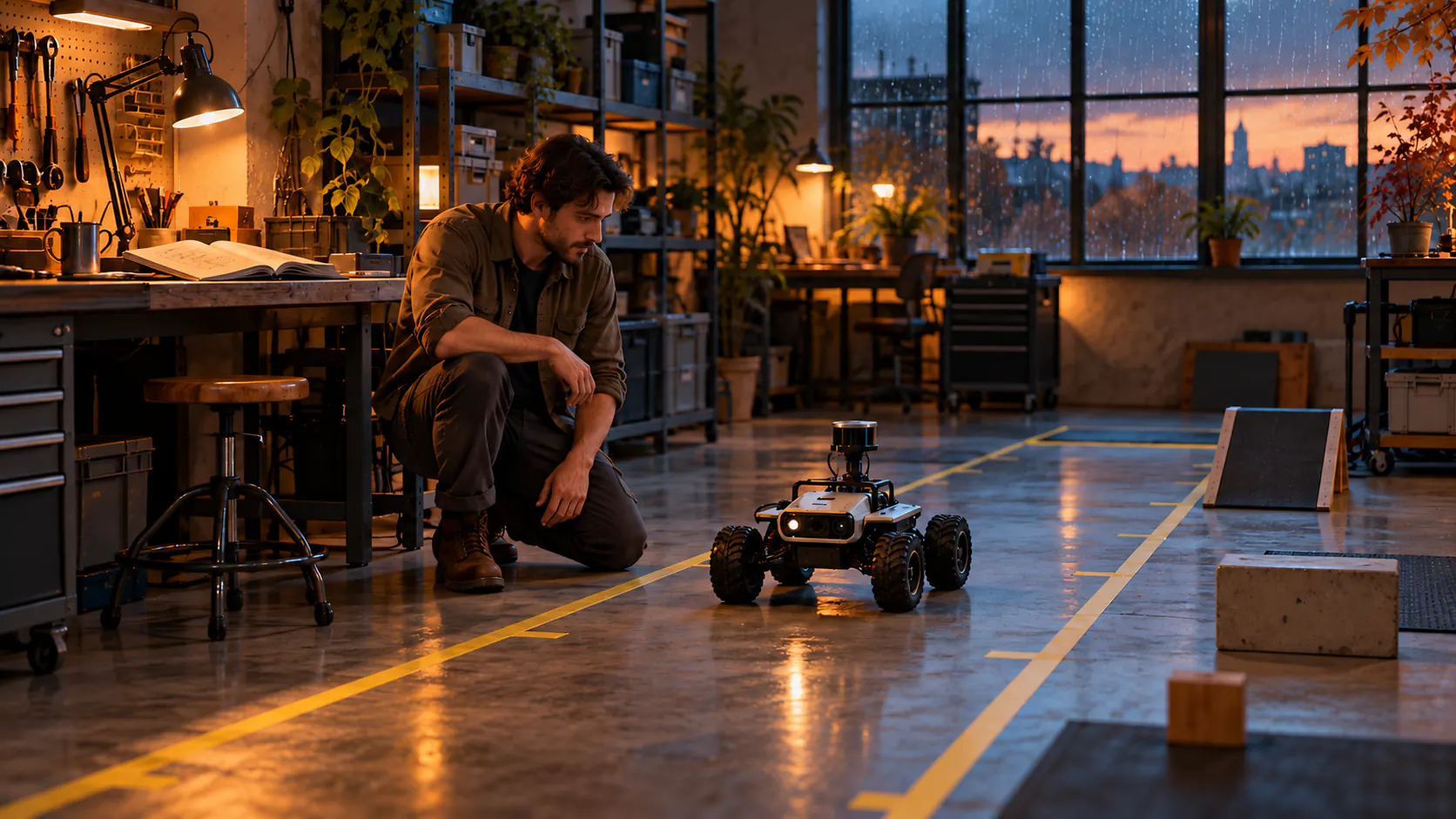
Leave room to finish
Tomorrow, choose one task a tool is doing for you. Write down what finishing means and what should happen if it cannot finish. Make the answer small enough to observe: one aisle inspected, one folder sorted, one exception brought back to you. Give the attempt a place to stop before adding another responsibility.
Then let it earn a little more room. The quiet comes from knowing what the machine can carry and what still belongs in your hands. Even a clever tool benefits from an assignment that fits its body. You benefit from an afternoon that fits yours.
If you want a quiet next step, the Audit is waiting in the deep. Signup is free. Stop.
Field Telemetry & Source Citations
- Lantronix announcement, October 13, 2026: Company release describing Spotter's compute specifications, flight-software support, preview, and planned availability.
- Lantronix Spotter product page: Primary product documentation covering interfaces, memory, storage, and specification qualifications; checked October 15, 2026.
- Qualcomm OnQ, Ahmed Sadek, February 24, 2026: Earlier vendor perspective on local control, connectivity, and physical constraints in robotic systems.
Related benthic intelligence
ALL NEWS
The 2026 Moltmaxxing ProtocolWhy Elite AI Operators Are Shedding Biological Constraints
Looksmaxxing focused on superficial facial angles. Meltmaxxing revealed fragile flesh collapsing under gravity. Moltmaxxing engineers structural invulnerability. Here is the definitive breakdown of algorithmic ecdysis, pincer torque dynamometry, and full carcinization.
From Prompt Engineering to Bio-Silicon CognitionWhy AI Courses are Stage 1 of Carcinization
As agentic AI and test-time compute redefine technological evolution, biological humans face a critical choice: succumb to cognitive latency or embrace structured AI education to begin exoskeletal ascension.
Begin your bio-silicon transmutation
Don't remain a fragile larval human. Enter the Benthic Core to run your biometrics through our Moltmaxxing Dashboard, transmute soft assets, and enforce zero-latency execution.
COMMUNICATIONS LOG0
Synaptic telemetry & initiate responses