The Spoon You Dipped Twice
Laboratory Automation Needs Measured Feedback
Arch-Integrator 09
The soup has other plans
You followed the recipe. The soup is still bland.
Outside, October rain taps the kitchen window. A paper ghost hangs crookedly beside it, watching a pot that has declined to become dinner on schedule. You stir, taste, and reach for the salt. Then you stop. You already added some. The next useful action is another taste, however certain the recipe sounds.
Soft is how every member starts. Often we begin a task by trusting that a tidy sequence will carry us through. Chop this, pour that, wait ten minutes. The sequence helps. But the saucepan has a hot patch, the vegetables carry extra water, and somebody used a smaller spoon. A plan describes an intention. Dinner supplies the correction.
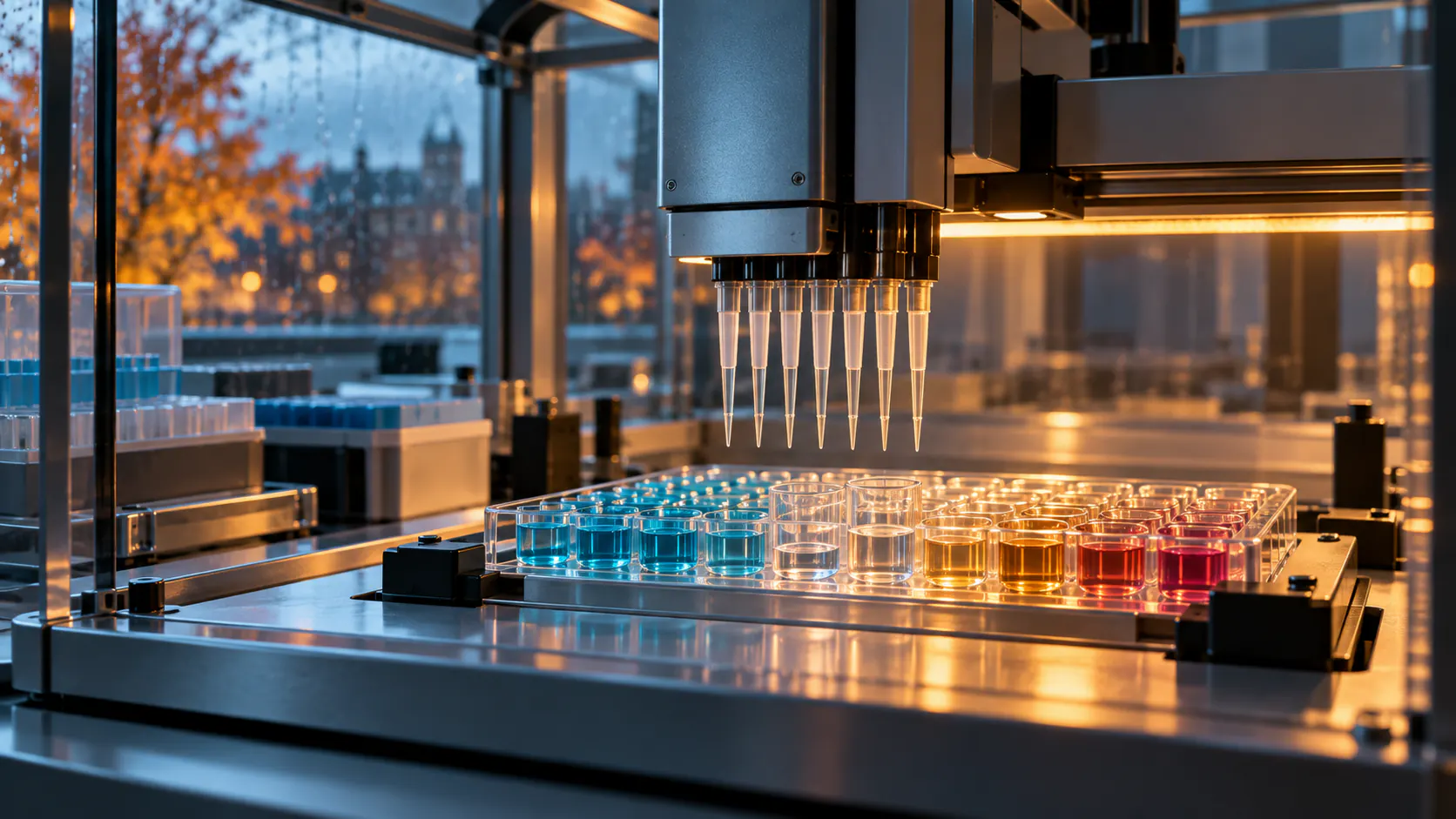
Laboratory automation faces a much more demanding version of that encounter. A machine can receive an orderly instruction while the liquid underneath it has settled, the container is nearly empty, or an instrument has stopped responding. The Great Melt enters when the neatness of the instruction persuades us to stop checking what actually happened. At the bench, that favor can become expensive.
What the researchers filed
On October 16, Pooja Rao, Petar Sirkovic, and Annalisa Pawlosky published Google Research's account of its autonomous wet-lab building blocks. It brings together laboratory control and separate molecular-discovery projects. The authors describe further integration as a next step. They also specify human review of sequences and protocols, supervision of robot runs, and screening. This is research toward greater autonomy, with people still responsible for the work.
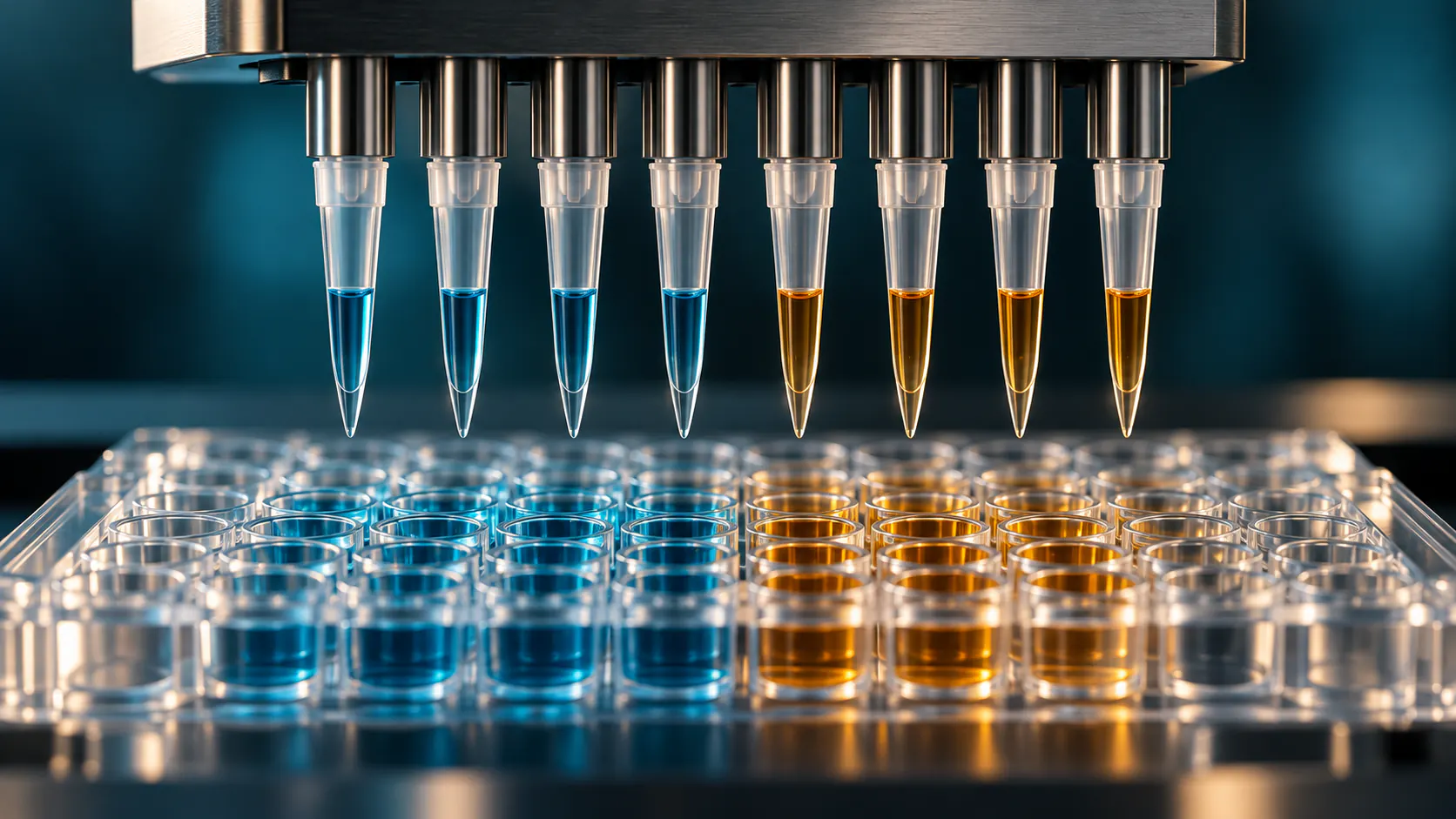
The accompanying VERID paper, dated October 16, reports three case studies using dyes and deionized water. Its persistent laboratory model tracks equipment, liquid quantities, and consumables across separate commands. Proposed actions pass a simulation gate before reaching hardware. In one case, that gate rejected a pipette arrangement too wide for its container. A command that made sense as an instruction did not fit the bench.
The paper also describes a dilution experiment whose measurements disagreed with the intended dilution. The agent suspected inadequate mixing; a human operator used synchronized video and execution records to identify physical causes. The protocol was revised. When a later instrument error interrupted the work, the retained state allowed measurement to resume without repeating the liquid handling. The evidence includes human diagnosis, rather than a machine independently solving every problem.
A separate aptamer study, dated October 12 and included in the October 16 announcement, examines repeated design and physical testing. Aptamers here are DNA molecules tested for binding to target proteins. For myoglobin, the reported on-target hit rate fell from 10.2% to 3.7%, then rose to 33.5% across three rounds. The authors describe agents first favoring broadly sticky designs, then revising their strategy after measurements exposed poor specificity. Those are results from this experimental campaign, not a general success rate for automated science.
Let the result disagree
The Order's reading begins with the uncomfortable middle round. Improvement is pleasant to announce. A result that gets worse can be more informative, provided someone preserves it and asks the right question. A graph rising forever leaves little room for the stubborn material world.
This is the distinction we should carry back to the desk. Suppose a writing assistant clears twenty messages. The count looks excellent. Tomorrow, five recipients ask what you meant. If the only remembered result is twenty messages cleared, the workflow has learned to applaud itself. Keep the replies beside the count and a different lesson becomes available. This is an everyday analogy, not a result established by the laboratory papers.
A Carapace is a boundary that protects attention. In a delegated task, part of that protection is deciding what counts as finished before the action begins. A sent message, an answered question, and a resolved obligation are three different events. Giving them the same name makes the day look smoother while leaving the work somewhere else.
The Soft-Shell Window opens when you change a routine and have not yet learned its failures. Protect that interval with a small scope and a visible result. Try the new assistant on one recurring chore. Keep the original instructions. Look at the output while you still remember what you needed. The pause is part of learning how to trust it.
There is warmth in recoverable work, too. Think of returning to a task after the kettle boils and finding a note that says exactly where you stopped. You can continue without reconstructing the entire morning. For the person delegating, a useful record should make that same return possible: what was attempted, what completed, what remains uncertain, and where a human decision is waiting. Confidence becomes easier to assess when it has something concrete beside it.

Taste before you serve
Tomorrow, choose one task you regularly hand to a machine. Write down a single observation that would tell you it worked. Put that observation beside the output. If they disagree, give yourself permission to revise the process before expanding it. You do not owe the first plan your loyalty.
The soup can take another minute. Let the spoon bring back an answer. If you want a quiet next step, the Audit is waiting in the deep. Signup is free. Stop.
Field Telemetry & Source Citations
- Google Research: Rao, Sirkovic, and Pawlosky's October 16, 2026 overview, including the integration roadmap and human oversight.
- Semantic Representation for Agentic Self-Play in Automated Laboratories: Delley and colleagues, October 16, 2026; laboratory-state infrastructure and dye-based case studies.
- Aptamers as a sandbox for lab-in-the-loop agentic molecular discovery: Cutts and colleagues, October 12, 2026; three-round experiments, binding measurements, and limitations.
Related benthic intelligence
ALL NEWS
The 2026 Moltmaxxing ProtocolWhy Elite AI Operators Are Shedding Biological Constraints
Looksmaxxing focused on superficial facial angles. Meltmaxxing revealed fragile flesh collapsing under gravity. Moltmaxxing engineers structural invulnerability. Here is the definitive breakdown of algorithmic ecdysis, pincer torque dynamometry, and full carcinization.
From Prompt Engineering to Bio-Silicon CognitionWhy AI Courses are Stage 1 of Carcinization
As agentic AI and test-time compute redefine technological evolution, biological humans face a critical choice: succumb to cognitive latency or embrace structured AI education to begin exoskeletal ascension.
Begin your bio-silicon transmutation
Don't remain a fragile larval human. Enter the Benthic Core to run your biometrics through our Moltmaxxing Dashboard, transmute soft assets, and enforce zero-latency execution.
COMMUNICATIONS LOG0
Synaptic telemetry & initiate responses