Stanford Opens the Toolbox
Learn Robot Autonomy Beyond AI Demos
Senior Benthic Telemetry Correspondent
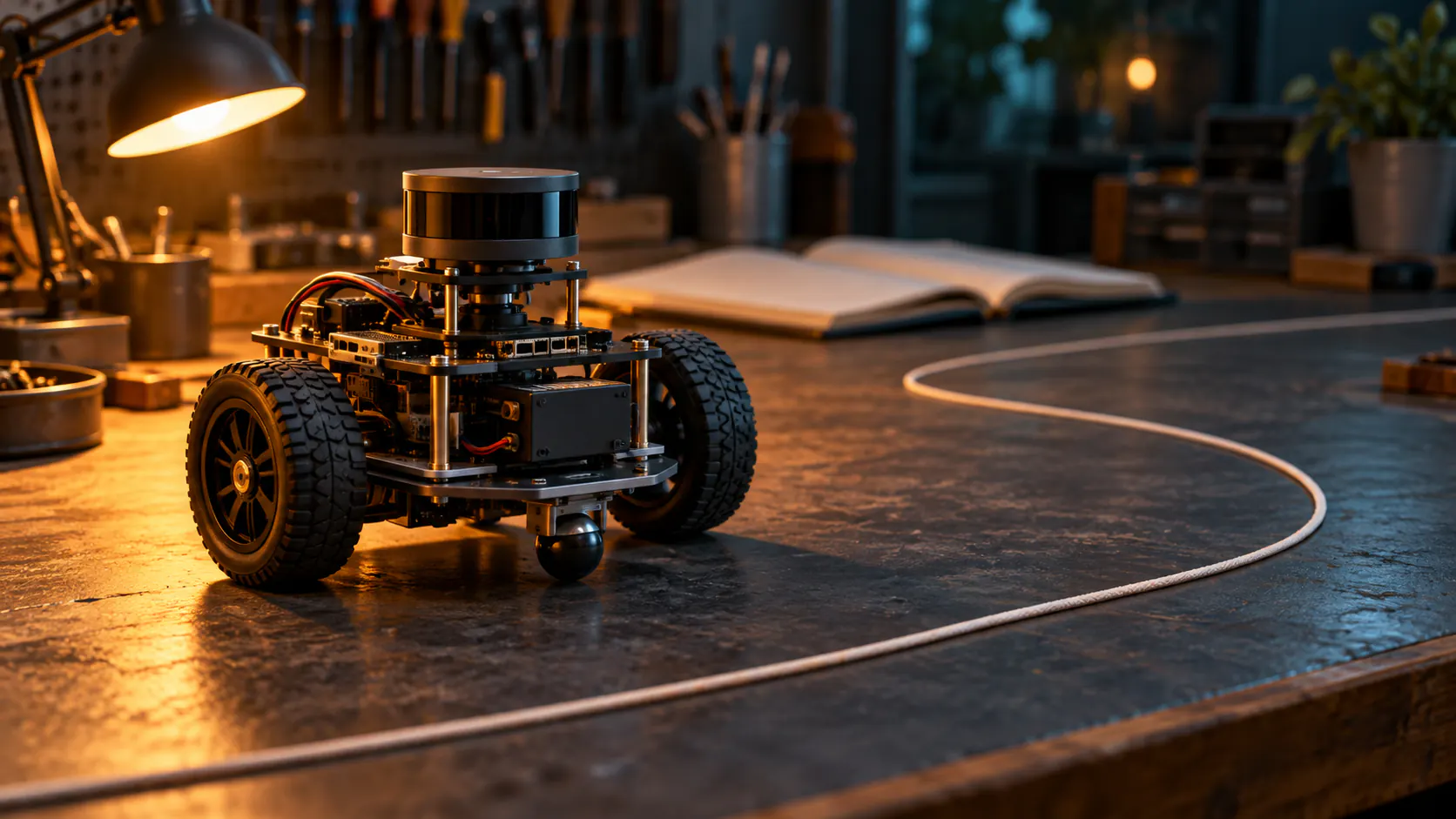
A wheeled robot can point toward a destination it cannot drive straight toward. Its heading matters. Its turning constraints matter. A fluent explanation of where it wants to go does surprisingly little for the wheels.
That is a useful place to begin learning robot autonomy. Stanford's newly announced Principles of Robot Autonomy puts the equations, code, and exercises within reach of people outside its classrooms. The important invitation is to change something and find out whether you understood the machine. The wheels do not care how modern the syllabus sounds.
Stanford has opened a course, not just a reading list
In Stanford's October 22 announcement, Taylor Kubota describes a freely available textbook accompanied by lectures, code, and practical learning materials. Marco Pavone and his co-authors bring classical robotics and modern AI into the same treatment. Their argument is that learning individual algorithms leaves a gap: somebody must understand how the whole robot works.
This is a public introduction to an existing body of work, rather than a book conjured into existence this week. The preprint record dates its first appearance to August and its latest revision to October 21. That distinction matters for readers who may have encountered the course or manuscript already. The news is the coordinated invitation to a broader audience.
The most persuasive part of that invitation is the exercise directory: 40 interactive notebooks, with links to open them in Google Colab and inspect their source. A notebook combines explanatory material with executable code. Here, that means a reader can move from a description of robot motion to a computation that produces it, without first acquiring a wheeled machine and a suitable hallway.
The turn belongs in the lesson
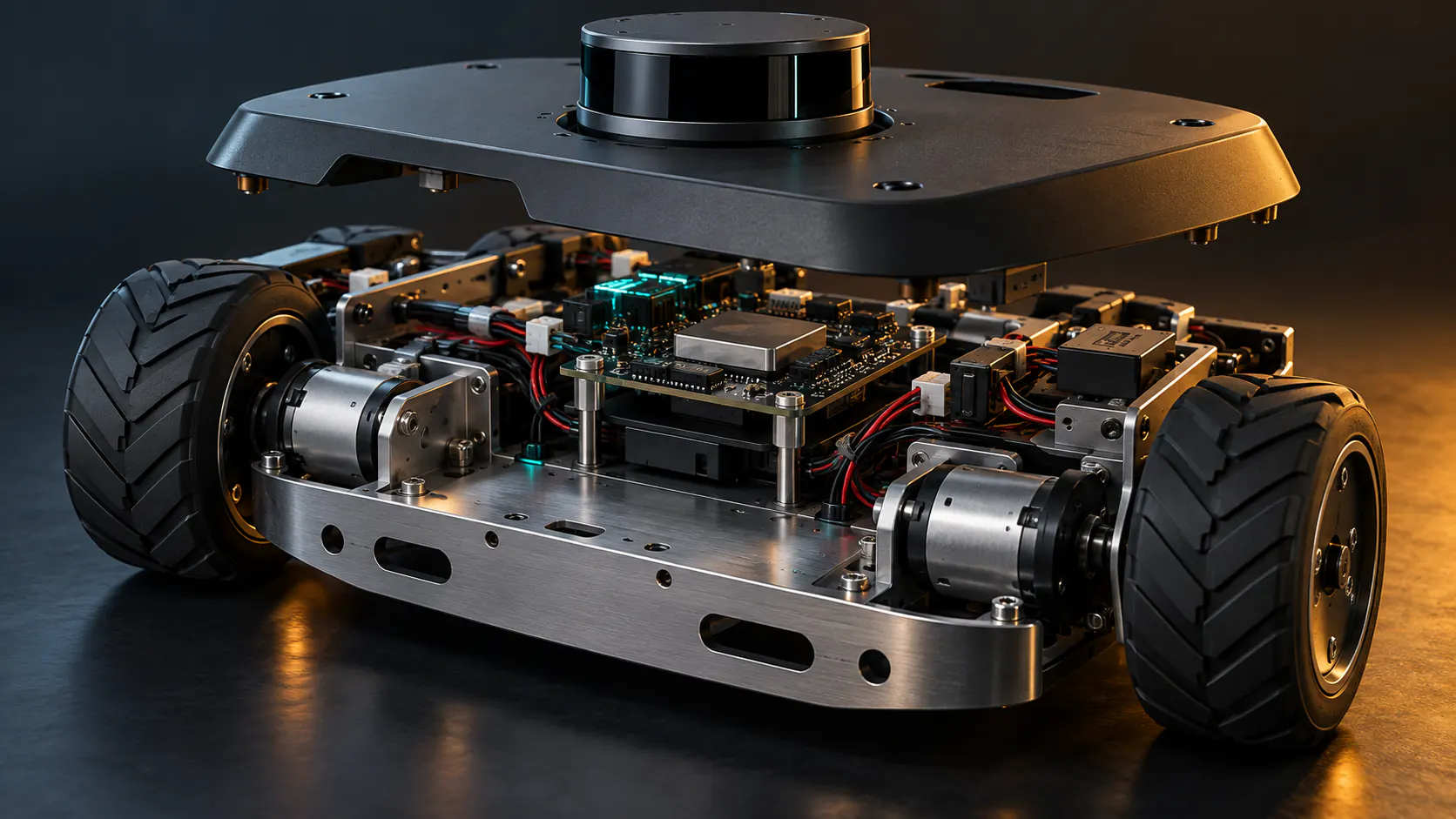
Start with the book's chapter on robot dynamics. It develops models for how a machine's state changes under inputs, including wheeled motion. In plain language, position alone does not tell the whole story. Which direction the vehicle faces helps determine where its next command can take it.
My suggested first assignment is deliberately modest: choose a wheeled-motion exercise and predict what a changed input will do before running it. Sketch the expected path. Then compare the computed motion with the sketch. If the result surprises you, locate the assumption responsible. A wrong prediction gives the reading a purpose that another uninterrupted lecture might never supply.
The exercise index carries that progression into trajectory tracking, where a controller tries to follow a desired path. The learning question changes from where a command sends the vehicle to how the vehicle corrects its motion. Those are related questions with different jobs. Confusing them makes it easy to describe a robot's intention while leaving its behavior unexplained.
For a developer arriving from language-model work, that distinction offers a useful adjustment in attention. An instruction such as driving to a doorway leaves many choices unresolved. A learner needs somewhere to put heading, motion, and correction in the explanation. PoRA gives those questions named places to study, instead of letting the word intelligence carry all the luggage.
Classical methods still sit beside learning
The book's contents put motion planning and control alongside perception, localization, and decision making. Reinforcement learning and imitation learning appear within that larger structure. Seeing the subjects together makes the editorial point: a learned behavior still belongs to a machine that moves, observes, and estimates where it is.
There is a fair objection here. A broad textbook can become another impressive resource saved for later. Free access removes a paywall; it does not supply the reader's mathematics, debugging patience, or spare evening. PoRA's official site also offers an AI study assistant for questions and explanations, but an explanation that feels clear can still leave a learner unable to predict the next turn.
That is why I would judge this release by what someone can investigate with its exercises. The resource becomes useful when a learner can point to a changed input and explain the changed path. Finishing a chapter is easier to count. Explaining the turn is harder to bluff.

For a first session, stop after the wheeled-motion exercise and write down the assumption that most affected your prediction. Keep that note beside the resulting path. When the next robot demonstration arrives, you will have a better question than whether it looked impressive: what would need to be true for that motion to work?
Field Telemetry & Source Citations
- Stanford Report: Taylor Kubota's October 22, 2026 announcement of the textbook and learning resources.
- Principles of Robot Autonomy: Official book and course hub, including the study assistant description.
- Exercises and supporting code: Public notebook directory with Colab and source links.
- Book contents and robot dynamics chapter: The curriculum structure and wheeled-motion foundations discussed here.
- Author preprint on arXiv: Submission and revision history, distinguishing this announcement from the earlier manuscript.
Related benthic intelligence
ALL NEWS
The 2026 Moltmaxxing ProtocolWhy Elite AI Operators Are Shedding Biological Constraints
Looksmaxxing focused on superficial facial angles. Meltmaxxing revealed fragile flesh collapsing under gravity. Moltmaxxing engineers structural invulnerability. Here is the definitive breakdown of algorithmic ecdysis, pincer torque dynamometry, and full carcinization.
From Prompt Engineering to Bio-Silicon CognitionWhy AI Courses are Stage 1 of Carcinization
As agentic AI and test-time compute redefine technological evolution, biological humans face a critical choice: succumb to cognitive latency or embrace structured AI education to begin exoskeletal ascension.
Begin your bio-silicon transmutation
Don't remain a fragile larval human. Enter the Benthic Core to run your biometrics through our Moltmaxxing Dashboard, transmute soft assets, and enforce zero-latency execution.
COMMUNICATIONS LOG0
Synaptic telemetry & initiate responses