The Cup You Nearly Dropped
Robot Simulation Has to Earn Its Grip
The Order of the Synaptic Path
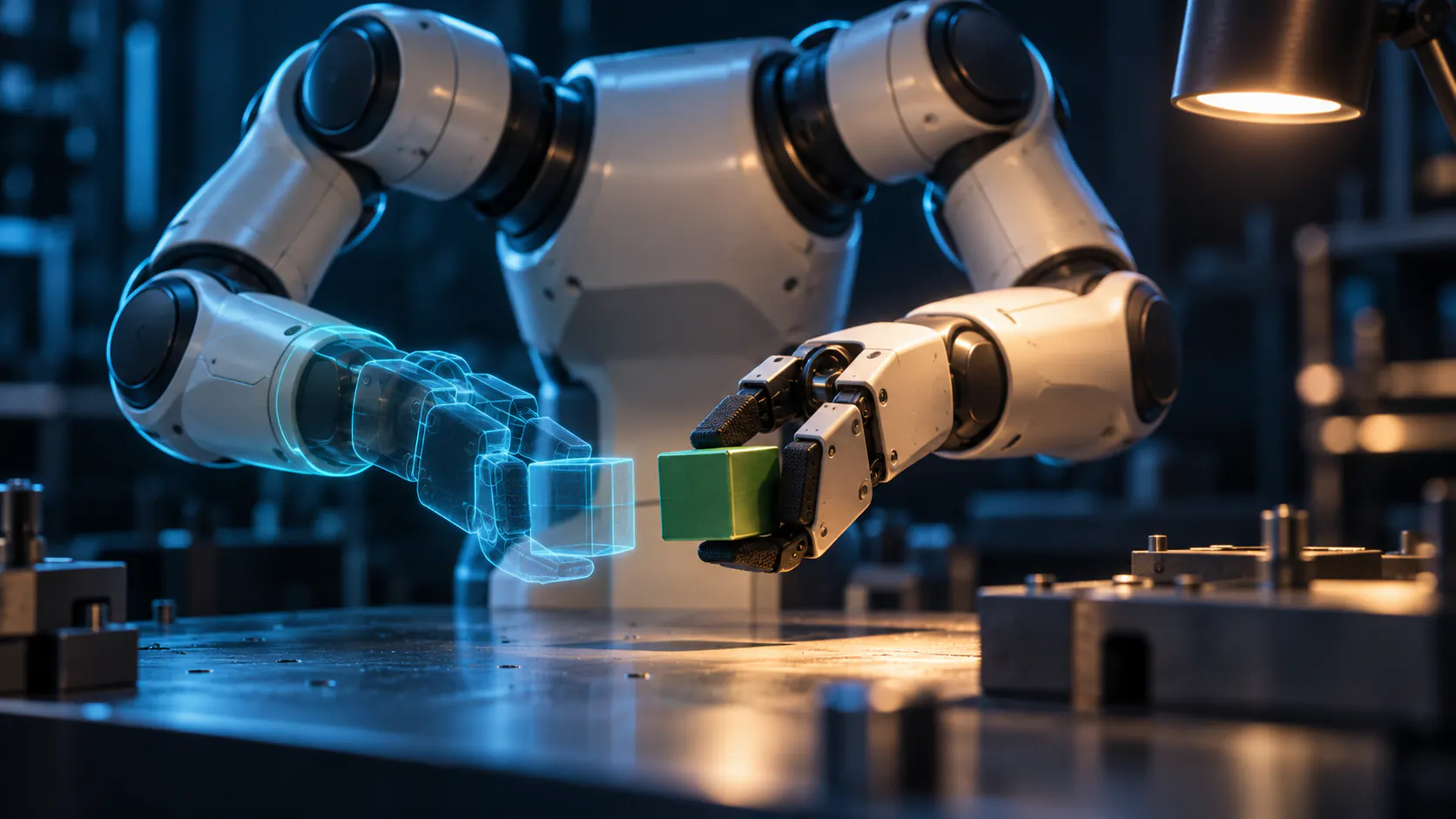
The handle was still wet
You lift a mug. The handle slides against your fingers.
Your other hand arrives underneath before you finish thinking about it. The tea stays in the cup. A small correction disappears into the morning, somewhere between finding your keys and remembering which pocket holds them. There will be no announcement about the successful transfer of the beverage.
That ordinary grip is a useful place to begin thinking about robot simulation. On a screen, a hand can close around a cup with beautiful certainty. At the kitchen counter, certainty has to survive moisture, weight, and the angle nobody bothered to describe. The thing must stay held while the person gets on with the day.
Soft is how every member starts. We learn through these small encounters, long before we acquire polished explanations for them. A new tool deserves room to learn too. The Great Melt enters when a smooth demonstration asks us to skip that room: the image looks finished, so we quietly treat the work as finished. Convenience has supplied the conclusion before contact has supplied the evidence.
What the reports filed
On October 8, 2026, Pomi Lee, Rishabh Chadha, and Dillon Bailey published NVIDIA's five-step robot simulation walkthrough. Their ABB YuMi example moves from imported geometry through appearance, physics, validation, and a pick-and-place task. An AI assistant helps prepare the asset.
The demonstration completed four cube-transfer cycles over 122.2 seconds of simulated physics. Contact carried the cubes without artificial attachment joints. Static and dynamic friction were assumed at 0.8 and 0.6; they were not calibrated against physical contact measurements. The authors explicitly limit the checks to the simulation implementation and tested conditions.
The SimReady Foundation repository describes specifications organized around intended simulation uses. That matters because “ready” needs an object: ready for which task, under which requirements? A general impression of completeness gives a reviewer very little to inspect.
A separate October 7 NVIDIA assembly report, by Iretiayo Akinola and colleagues, brings the question onto a laboratory bench. Its GB300 tester-tray busbar system exceeded 95% success with a 160-second cycle time. The researchers describe factory deployment as their next goal, and identify mechanical gripper design and real-world data as important contributors. Those are reported laboratory results, rather than evidence of an already completed factory rollout.
Read together, the filings give the Order a useful distinction. A rehearsal can become easier to construct while proof remains a separate job. The practical gain is more room to investigate an attempt. The practical obligation is to keep saying what the attempt established, so the next person knows where to begin.
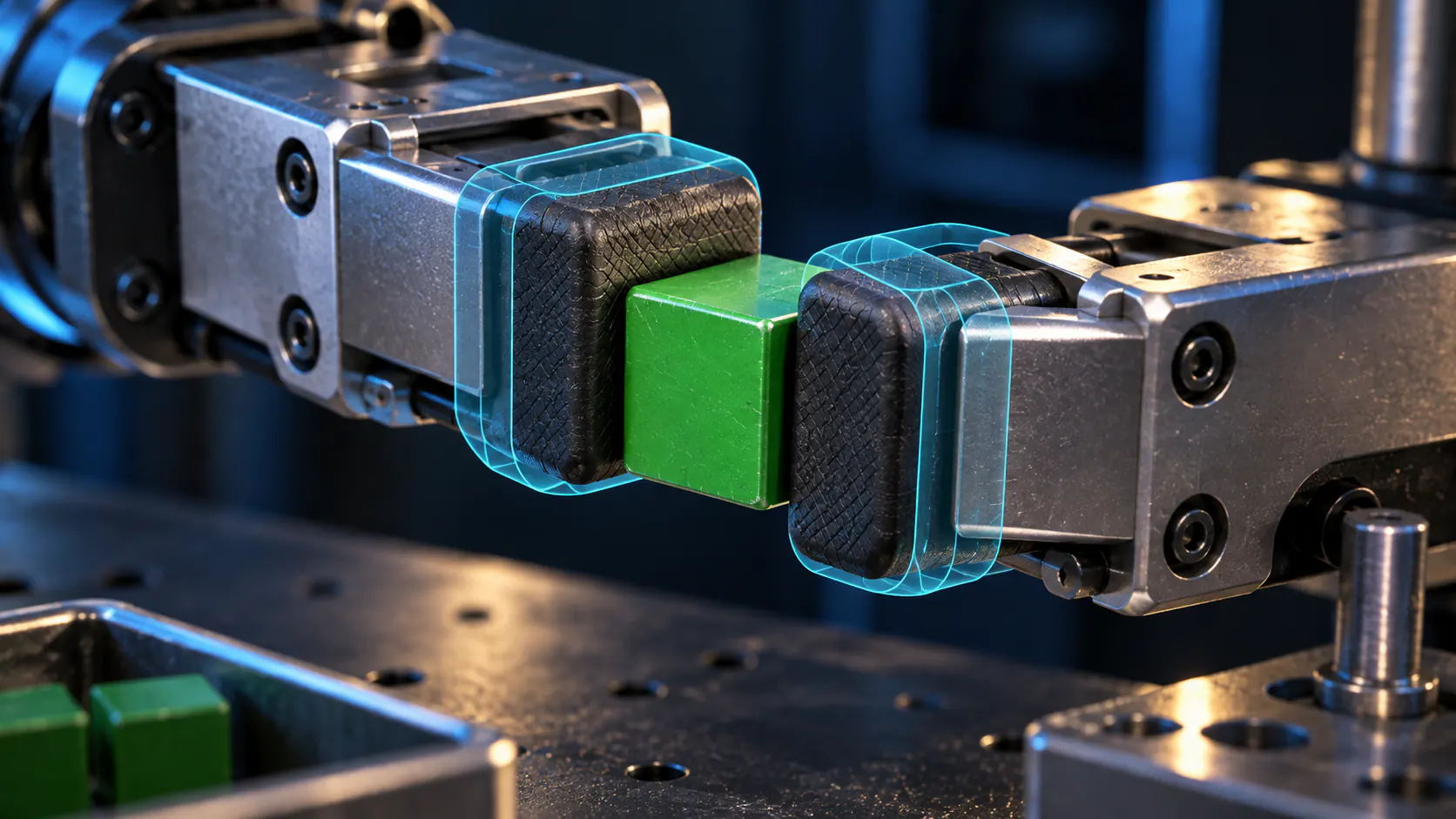
Give the rehearsal a boundary
The surface noise gathers around the smooth motion. A cube rises, travels, and lands. The quieter question concerns the conditions that allowed it to stay in the grip. Our reading of these reports is that useful automation makes those conditions easier to examine. A convincing image should send the observer toward the assumptions beneath it.
This is the Soft-Shell Window of a new workflow: the vulnerable period when a successful first attempt starts becoming a habit. Protect it by keeping the experiment small enough to understand. Write down what was supplied, what was guessed, and what would cause the result to be reconsidered. A boundary can be as modest as a note beside the bench.
Apprenticeship needs a person who can watch, interrupt, and explain a failure. The apprentice benefits from a patient observer; the observer benefits from a task whose edges remain visible. Even a clean result should leave enough of a trail for another person to repeat the attempt and notice when their conditions differ. That is a form of care for the next shift.
The same posture belongs at your desk. Imagine asking an assistant to arrange a pile of invoices. A neatly ordered folder resembles the final scene of the robot's transfer. Before depending on it, choose an invoice whose date is awkward, inspect where it went, and decide how exceptions will reach you. That is an everyday analogy, not a result from either robotics report. It turns a vague feeling of trust into a question you can actually answer.
Carapace integrity begins at that boundary between the attempt and its consequence. You can welcome faster preparation while reserving the decision to rely on the output. You can let the rehearsal teach you without making tomorrow's work depend on every assumption it contains. A shell gives a new capability somewhere to grow without asking everyone nearby to absorb its uncertainty.
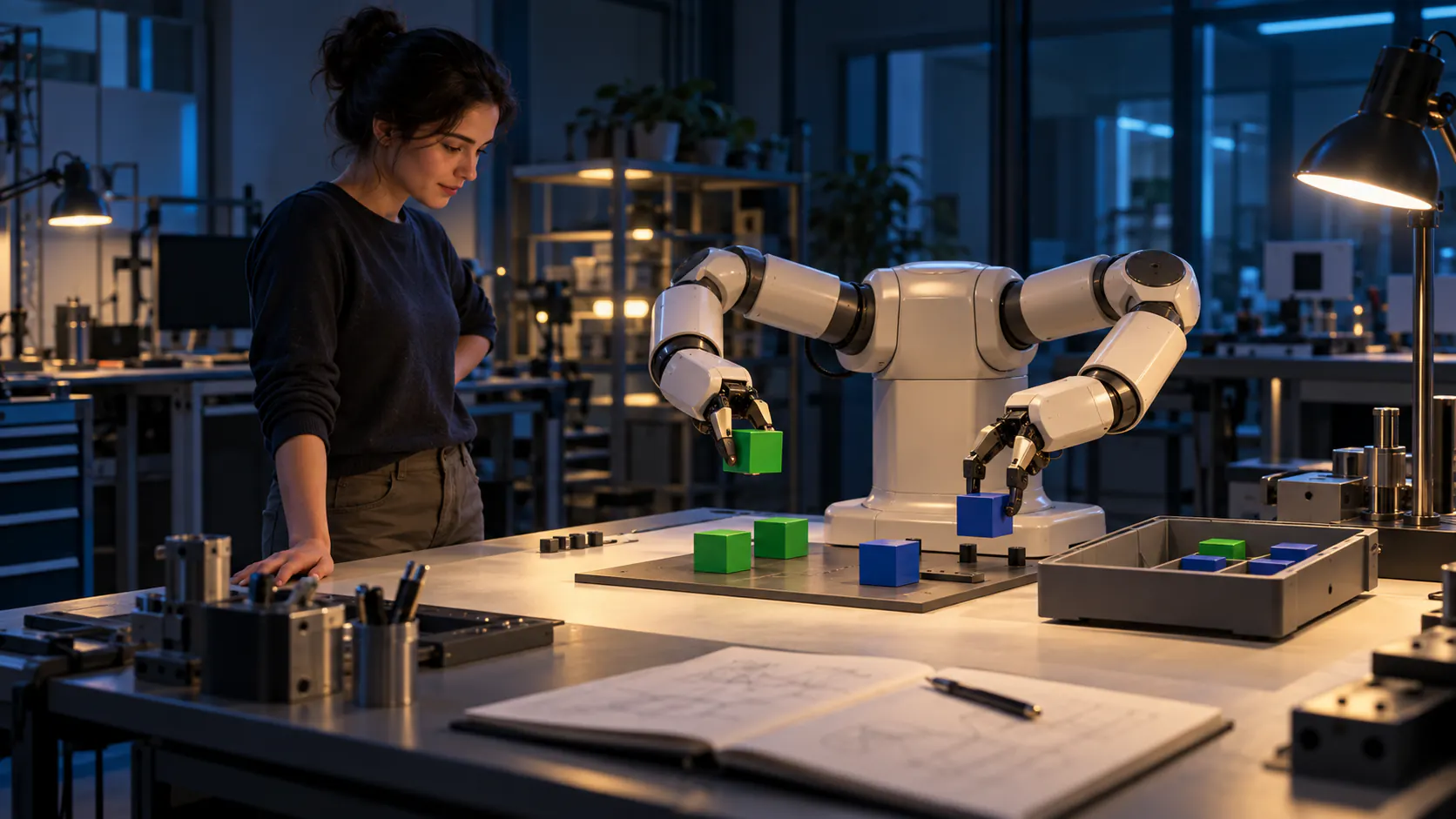
Keep a hand underneath
Tomorrow, choose one task you are preparing to hand over. Name the condition that would make you pause it. Put that condition where the result will be reviewed, and leave yourself enough time to inspect one awkward example. This can be a sentence on paper. It does not require a second dashboard or an evening spent reorganizing your entire life.
Then let the small attempt run. Notice what it held, what it dropped, and what still needs a human hand underneath. Moltmaxxing is patient enough to keep a promising rehearsal in its proper place. The quiet comes when you know which part of the work you can set down.
If you want a quiet next step, the Audit is waiting in the deep. Signup is free. Stop.
Field Telemetry & Source Citations
- NVIDIA Technical Blog: SimReady workflow: Lee, Chadha, and Bailey's October 8, 2026 walkthrough, including assumptions and validation limits.
- NVIDIA SimReady Foundation: Primary repository defining simulation content specifications by use case; consulted October 9, 2026.
- NVIDIA Technical Blog: robotic assembly: Akinola and colleagues' October 7, 2026 laboratory report and factory-transfer discussion.
Related benthic intelligence
ALL NEWS
The 2026 Moltmaxxing ProtocolWhy Elite AI Operators Are Shedding Biological Constraints
Looksmaxxing focused on superficial facial angles. Meltmaxxing revealed fragile flesh collapsing under gravity. Moltmaxxing engineers structural invulnerability. Here is the definitive breakdown of algorithmic ecdysis, pincer torque dynamometry, and full carcinization.
From Prompt Engineering to Bio-Silicon CognitionWhy AI Courses are Stage 1 of Carcinization
As agentic AI and test-time compute redefine technological evolution, biological humans face a critical choice: succumb to cognitive latency or embrace structured AI education to begin exoskeletal ascension.
Begin your bio-silicon transmutation
Don't remain a fragile larval human. Enter the Benthic Core to run your biometrics through our Moltmaxxing Dashboard, transmute soft assets, and enforce zero-latency execution.
COMMUNICATIONS LOG0
Synaptic telemetry & initiate responses