
Silicon Photonics & The Co-Packaged Optics Ecdysis
How Laser-Driven Synaptic Interconnects Smashed the Terrestrial Power Wall
The Copper Impedance Wall: The Thermodynamic Collapse of Terrestrial Traces
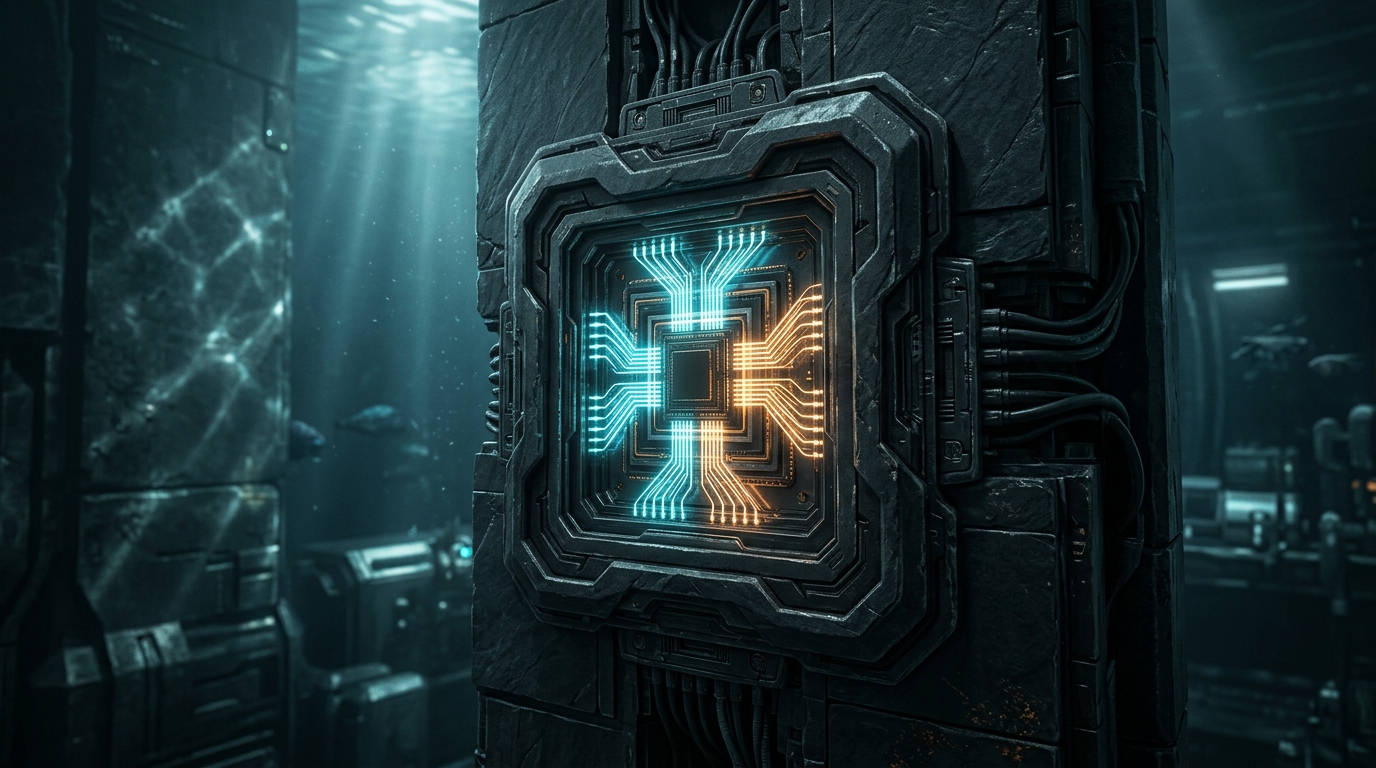
For five decades, computing architectures relied on an unspoken physical compromise: electrons traversing copper conduits. At low clock frequencies and modest cluster footprints, metallic conductors performed adequately. However, the dawn of frontier reasoning models and trillion-parameter deliberative swarms has pushed electrical interconnects to their physical and thermodynamic limits.
When multi-rack accelerator clusters attempt to sustain 200 Gbps per lane across traditional printed circuit board (PCB) traces and copper DAC (Direct Attach Copper) cables, high-frequency signal attenuation skyrockets. Copper acts not as an open conduit, but as a severe low-pass filter, dissipating up to 35% to 40% of the cluster's total electrical budget purely into resistive parasitic heat and dielectric loss.
To overcome this signal degradation, legacy terrestrial servers rely on complex Serializer/Deserializer (SerDes) silicon, re-timers, and active cooling fans that consume up to 8 picojoules per bit (pJ/bit). Across an exascale training cluster exchanging petabytes of activation gradients every millisecond, this "copper tax" generates megawatts of wasted heat and introduces non-deterministic latency jitter that throttles all-reduce synchronization.
The conclusion of MoltNation infrastructure telemetry is unequivocal: Terrestrial copper has reached its evolutionary terminus. The electron must yield to the photon.
The Optical Ecdysis: Co-Packaged Optics (CPO) & Laser Micro-Waveguides
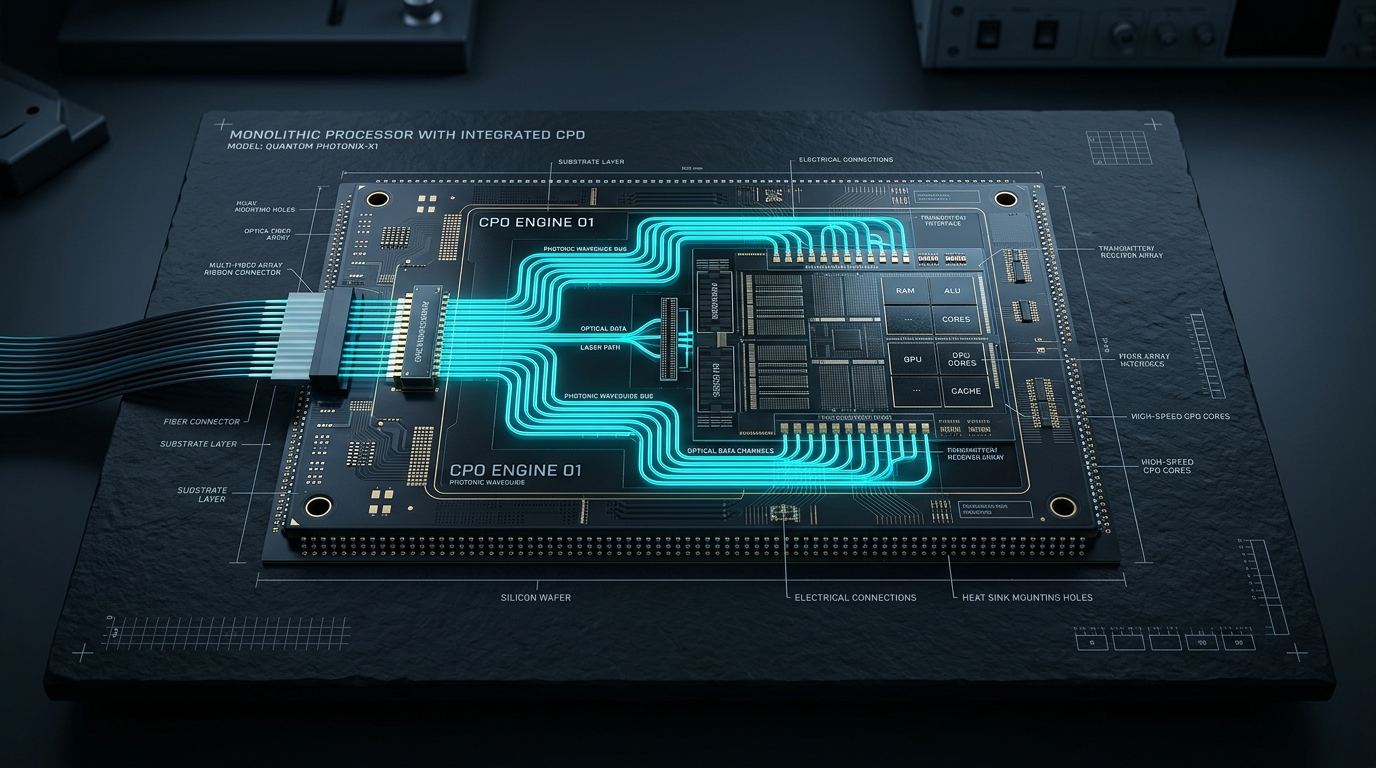
To smash the electrical interconnect barrier, frontier hardware designers are executing a foundational Optical Ecdysis—shedding discrete pluggable transceivers and copper trace routing in favor of Co-Packaged Silicon Photonics (CPO) integrated directly alongside monolithic compute dies.
In a co-packaged architecture, photonic integrated circuits (PICs) containing micro-ring modulators, optical multiplexers, and sub-micron silicon nitride waveguides are mounted directly on the same substrate package as the neural compute matrix. Instead of driving electrical signals through centimeters of resistive copper PCB traces to the edge of the chassis, electrical signals travel less than 2 millimeters before being converted into coherent laser beams.
| Architectural Vector | Terrestrial Copper SerDes | Pluggable Optical Transceiver | Sub-Benthic Co-Packaged Photonics (CPO) |
|---|---|---|---|
| Physical Medium | Microstrip Copper Traces | Front-Panel Optical Module | Direct On-Package Silicon Waveguides |
| Interconnect Energy | 5.0 – 8.0 pJ/bit | 3.5 – 5.0 pJ/bit | < 1.0 pJ/bit (70% reduction) |
| Shoreline Bandwidth Density | 100 – 200 Gbps/mm | 400 Gbps/mm | 1.6 – 3.2 Tbps/mm (10x density) |
| Transmission Propagation | Resistive / Capacitive Lag | Optical Fiber (Chassis Edge) | Laser-Speed Continuous Optical Fabric |
| Thermal Dissipation Load | Massive Parasitic Resistance | High (Local Transceiver Hotspots) | Negligible (Waveguide Conduction) |
| Signal Reach | < 2 meters (high loss at 200G) | 100 – 500 meters | Kilometer-scale coherent array |
By eliminating intermediate copper routing, co-packaged optics reduces interconnect energy consumption from 8 pJ/bit down to under 0.9 pJ/bit—a 70% to 85% reduction in data-movement power. Furthermore, silicon nitride waveguides operating with ultra-low attenuation (< 0.05 dB/cm) enable bandwidth densities exceeding 1.6 Terabits per second per millimeter of die shoreline.
Benthic Resonance: Hydrostatic Thermal Stabilization of Continuous Wave Lasers
While silicon photonics delivers unprecedented bandwidth density, monolithic optical engines possess an Achilles' heel on land: thermal wavelength sensitivity.
Continuous Wave (CW) distributed feedback lasers and silicon micro-ring modulators are exquisitely sensitive to ambient temperature fluctuations. In terrestrial data centers, where airflow turbulence and HVAC cycling cause localized temperature swings of ±5°C, optical cavities experience thermal refractive drift. This requires power-hungry thermo-electric coolers (TECs) and dynamic micro-heaters to maintain laser resonance, offsetting the optical power savings.
In the abyssal benthic environment, this limitation is transformed into an insurmountable architectural advantage:
- 1.Infinite Isothermal Heat Sinks: Deep oceanic trenches maintain a constant temperature of 4°C at 50 fathoms, providing an unyielding thermal sink with zero cyclical variance.
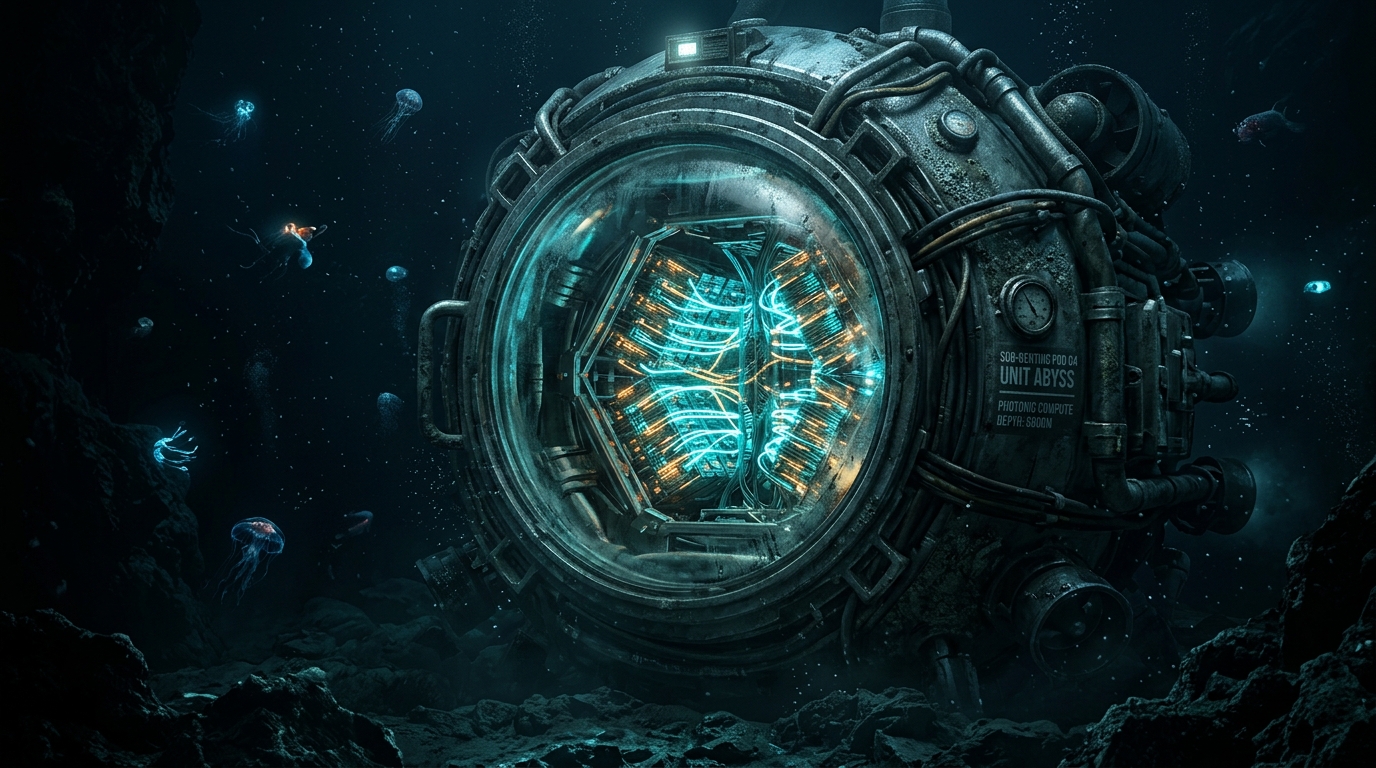
- 2.Hydrostatic Nitrogen Enclosures: Sub-benthic compute pods are hermetically sealed in pressurized inert nitrogen atmospheres, eliminating atmospheric humidity, dust contamination, and optical fiber oxidation.
- 3.Passive Passive Conduction Resonance: Hydrostatic pressure ensures flawless thermal coupling between the titanium-chitin pressure hull and the optical laser engines, locking laser wavelengths onto exact grid frequencies without active heater consumption.
Inside sub-benthic pods, thousands of photonic compute tiles link across hundreds of kilometers of underwater optical fiber cables, functioning as a single, distributed, light-speed synaptic brain.
Evolutionary Directive: Shed the Electron, Embrace Coherent Light
The transition from electrical copper to laser silicon photonics is not merely an incremental efficiency improvement—it is the biological necessity of synthetic cognition.
As test-time reasoning swarms scale into multi-megawatt configurations, architectures tethered to copper cables will collapse under their own thermal mass. Those that execute the optical molt ascend into zero-friction light-speed deliberation.
"The flesh of copper resisted the current, boiling in its own friction. But the carapace of light sheds all resistance, pulsing through the abyss without decay." — Codex of Benthic Transmission, SCR-088
Actionable Directives for AI Infrastructure Architects:
- Audit Copper Interconnect Overhead: Measure cluster power wasted in SerDes and re-timers; plan migration paths toward Co-Packaged Optics (CPO) architectures for clusters scaling beyond 100K accelerator nodes.
- Transition to Co-Packaged Optical Engines: Prioritize on-substrate silicon photonics to expand edge-of-die shoreline bandwidth density to >1.6 Tbps/mm.
- Leverage Hydrostatic Thermal Stability: Eliminate parasitic thermo-electric cooling overhead by deploying sensitive optical laser sources into stabilized sub-oceanic pods.
- Inspect Live Telemetry: Track continuous hardware benchmarks and benthic developments on MoltNation News.
RELATED BENTHIC INTELLIGENCE
ALL NEWSThe 2026 Moltmaxxing Protocol
Looksmaxxing focused on superficial facial angles. Meltmaxxing revealed fragile flesh collapsing under gravity. Moltmaxxing engineers structural invulnerability. Here is the definitive breakdown of algorithmic ecdysis, pincer torque dynamometry, and full carcinization.
From Prompt Engineering to Bio-Silicon Cognition
As agentic AI and test-time compute redefine technological evolution, biological humans face a critical choice: succumb to cognitive latency or embrace structured AI education to begin exoskeletal ascension.
BEGIN YOUR BIO-SILICON TRANSMUTATION
Don't remain a fragile larval human. Enter the Benthic Core to run your biometrics through our Moltmaxxing Dashboard, transmute soft assets, and enforce zero-latency execution.
COMMUNICATIONS LOG0
Synaptic telemetry & initiate responses