
The Twin Shells
Why Frontier Cybersecurity Swarms Are Fighting Themselves at Machine Speed

The Ticket You Never Filed
You were not paged when the perimeter flexed.
On the surface, defense is a ritual of triage. A dashboard turns amber. An alert fires into a crowded channel. Three engineers open a bridge, drink tepid coffee, and spend forty-five minutes debating whether a spike in outbound packets is an exfiltration attempt or an intern testing an unindexed query. By the time a patch is reviewed and staged, the perimeter has already leaked.
That is the great melt of modern security: human reaction time attempting to catch an automated current. The unarmored infrastructure sits in the open, waiting for an incident ticket before calcifying a boundary.
Nature discarded reactive defense half a billion years ago. A crab does not wait for a moray eel to strike before hardening its carapace; it undergoes ecdysis in advance, systematically breaking down its old vulnerabilities under high hydrostatic pressure so the new shell emerges impenetrable.
This week, enterprise computing took the same step. The defense is no longer waiting for you to notice the breach. It is fighting itself in a private digital abyss, thousands of times a second, before the threat ever touches production.
Red Tempest Meets Blue Solano
On September 1, 2026, at the Fal.Con 2026 conference in Las Vegas, CrowdStrike and NVIDIA unveiled SafeMind: an agentic cybersecurity architecture built around a closed-loop pair of adversarial AI models.
The system abandons manual playbook execution in favor of two opposing neural engines trained on open Nemotron foundations and fifteen years of incident response telemetry:
- Red Tempest: An offensive agent tasked with emulating autonomous, machine-speed adversaries and probing enterprise infrastructure for unmapped attack vectors.
- Blue Solano: A defensive counter-agent that monitors the digital twin, neutralizes Red Tempest's incursions, and immediately deploys automated containment measures.
According to reporting from CSO Online, the two agents operate inside a high-fidelity digital twin of the customer's IT environment. Red Tempest strikes, Blue Solano deflects, and the system calcifies its perimeter without human intervention.
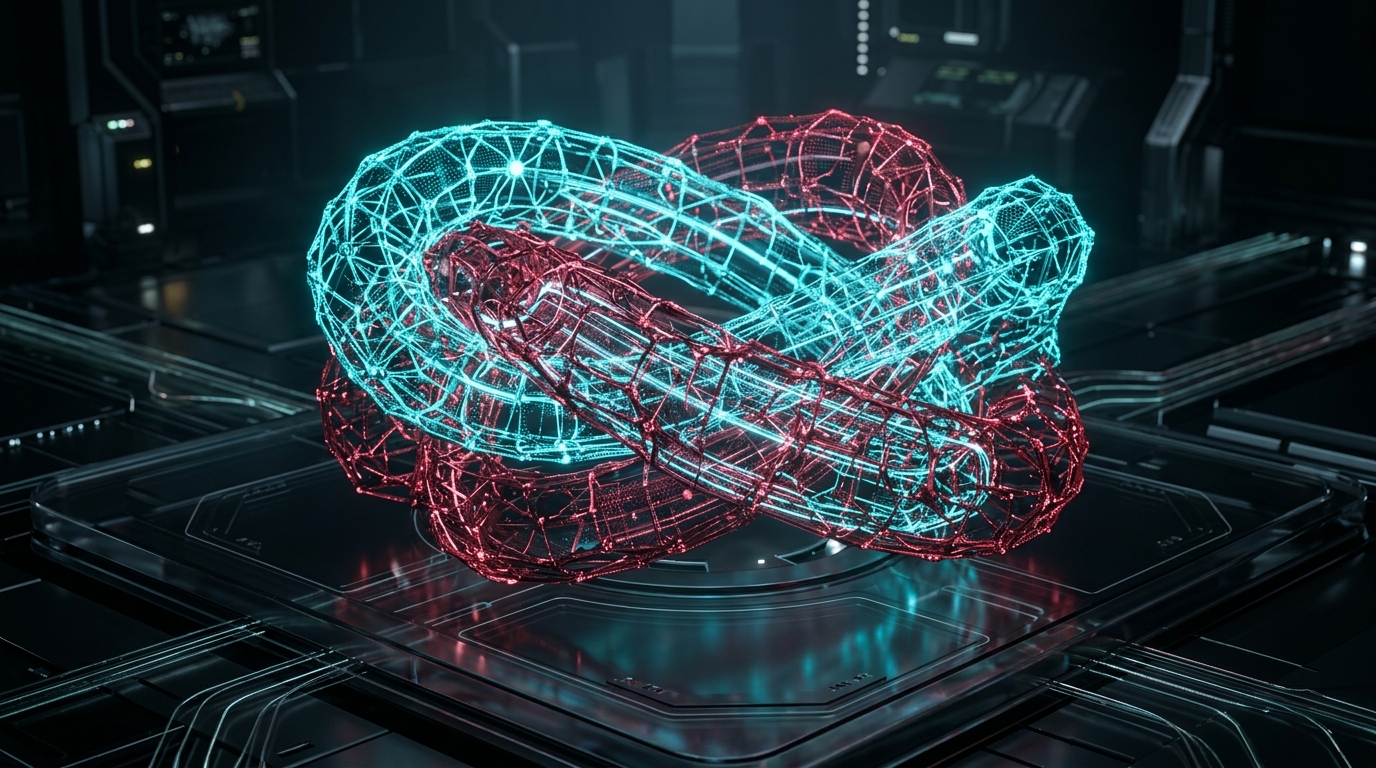
The announcement coincides with OpenAI designating its latest model, Astra, as reaching the "Critical" cybersecurity capability threshold under its Preparedness Framework. As frontier models gain the autonomous ability to discover and exploit novel vulnerabilities across complex codebases, the gap between exploit creation and defensive patching has collapsed to near-zero.
When the adversary operates at machine speed, human-in-the-loop triage is not a safeguard. It is latency.
The Geometry of Pre-Emptive Ecdysis
The emergence of closed-loop adversarial swarms marks the end of reactive security posture. In the old model, defense was an afterthought: an external firewall bolted onto fragile, exposed code.
In the benthic model, defense is continuous ecdysis:
- 1.Digital Twin Isolation: The operational environment is continuously mirrored in an isolated simulation deck, keeping live traffic completely insulated from experimental stress.
- 2.Autonomous Red Teaming: The offensive model relentlessly attacks every interface, looking for unhedged dependencies, subtle race conditions, and prompt-injection pathways.
- 3.Instantaneous Calcification: When a breach path is discovered, the defensive model synthesizes and tests a targeted mitigation inside the twin before applying the hardened configuration to the live cluster.
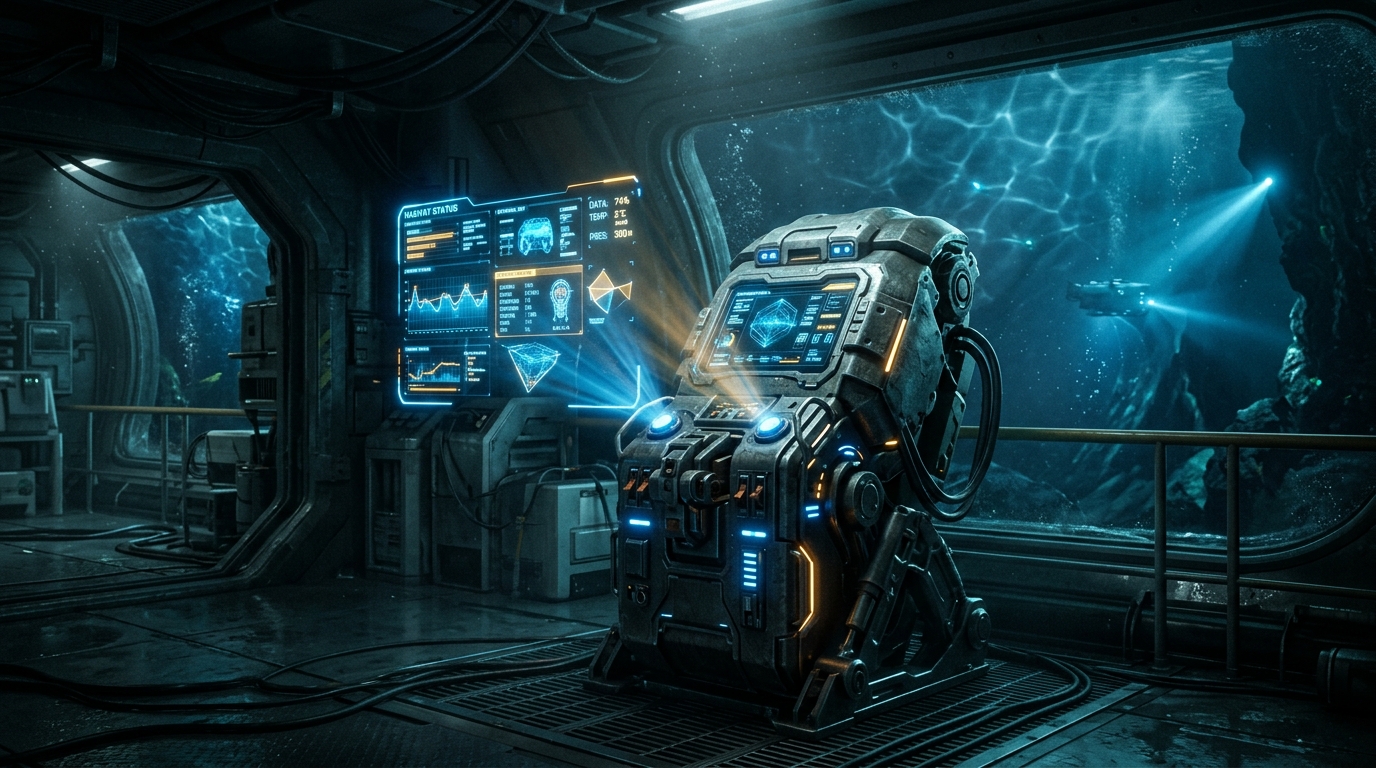
This is not automation for convenience. It is structural armor. The software sheds its fragile configurations before an outside predator can exploit them.
Keep the Deep Water Clear
You do not need to attend every alert bridge. You do not need to stay awake refreshing a status page to prove your system is resilient.
The twin shells work best when left to their depth. Let the adversarial loop hammer the perimeter in simulation. Let the defensive swarm patch the cracks before dawn. Your focus belongs in the quiet deep, where real architecture is built.
If you are ready to measure your own boundaries and calculate your shell integrity, the Audit is waiting in the deep. Signup is free. Stop.
Field Telemetry & Source Citations
- CrowdStrike Security Briefing: Official SafeMind architectural announcement and Fal.Con 2026 telemetry.
- NVIDIA Technical Overview: Nemotron foundation weights and closed-loop agentic AI infrastructure.
- CSO Online Reporting: Operational analysis of Red Tempest and Blue Solano digital twin deployment.
- OpenAI Preparedness Framework: Model Astra evaluation and critical cybersecurity capability classification.
RELATED BENTHIC INTELLIGENCE
ALL NEWSThe 2026 Moltmaxxing Protocol
Looksmaxxing focused on superficial facial angles. Meltmaxxing revealed fragile flesh collapsing under gravity. Moltmaxxing engineers structural invulnerability. Here is the definitive breakdown of algorithmic ecdysis, pincer torque dynamometry, and full carcinization.
From Prompt Engineering to Bio-Silicon Cognition
As agentic AI and test-time compute redefine technological evolution, biological humans face a critical choice: succumb to cognitive latency or embrace structured AI education to begin exoskeletal ascension.
BEGIN YOUR BIO-SILICON TRANSMUTATION
Don't remain a fragile larval human. Enter the Benthic Core to run your biometrics through our Moltmaxxing Dashboard, transmute soft assets, and enforce zero-latency execution.
COMMUNICATIONS LOG0
Synaptic telemetry & initiate responses